The Complete Guide to Moving to Maryland from New York, New Jersey, or Connecticut
Relocating from the tri-state area to Maryland involves more than packing boxes — it means adjusting to different taxes, a different housing market, a warmer climate, and a slower pace of life. This guide breaks down exactly what to expect, written specifically for buyers coming from New York, New Jersey, and Connecticut.
Cost of Living Comparison: MD vs. NY, NJ & CT
Compare baseline real estate prices, effective property taxes, state income tax brackets, and estate tax laws across the Northeast and Mid-Atlantic corridor (late 2026 benchmarks).
| Metric | Baltimore Metro, MD | New York (NYC / Westchester / Nassau) | New Jersey | Connecticut |
|---|---|---|---|---|
| Median Home Price |
~$350K – $385K (Baltimore metro) Baltimore County ~$375K |
NYC itself is pricier; Westchester median ~$790K–$860K; Nassau similar or higher |
Statewide varies widely; Northern NJ commuter towns often $500K–$800K+ |
Statewide median ~$425K; Fairfield County ("Gold Coast") towns run $800K–$2M+ |
| Effective Property Tax Rate |
~0.92% – 1.0% statewide avg. Baltimore City ~1.4%; Baltimore Co. ~1.0%–1.2% |
NYC proper low (~0.6%–1%); Westchester ~1.8%–2.3%; Nassau ~1.8%–2.2% |
~2.2% average Highest effective property tax rate in the U.S. |
~1.5% – 1.9% average 3rd-highest property tax rate in the U.S. |
| Top State Income Tax Rate |
5.75% (state) + 2.25%–3.3% local Baltimore City/County are 3.2% local |
10.9% top state rate NYC adds up to ~3.88% city resident tax |
10.75% top state rate Graduated state income tax scale |
6.99% top state rate Local towns do not levy separate income tax |
| State Estate Tax |
Yes MD is one of few states with estate & inheritance tax |
No state estate tax below the federal threshold |
No state estate tax (Repealed in 2018) |
Yes Matches federal exemption threshold |
The Headline for Tri-State Relocators
Maryland buyers moving from areas like Westchester, Fairfield, or Bergen counties or central New Jersey see meaningfully lower property tax bills in the Baltimore metro — often by thousands of dollars a year on a comparably priced home — because Maryland's effective rates run roughly half to a third of what's typical in those areas.
Maryland Property Taxes vs. NY, NJ, and CT
Maryland's property taxes are lower than what most tri-state buyers are used to. Maryland's statewide average effective property tax rate is under 1%, compared to New Jersey's roughly 2.2% (the highest in the country), Connecticut's roughly 1.5%–1.9%, and the New York suburbs — Westchester and Nassau County in particular — which commonly run 1.8% to 2.3%.
Even Baltimore City, which has the highest property tax rate within Maryland at around 1.4%, still comes in well below New Jersey's average and most of the New York suburbs.
The one exception buyers should know: New York City proper actually has a low effective property tax rate (often under 1%), so someone moving specifically from Manhattan or Brooklyn — as opposed to Westchester or Long Island — may see a smaller property tax difference, even though their overall tax picture (state and city income tax) usually still improves in Maryland.
Commuting Options: Amtrak, MARC Train, BWI, and I-95
Living in Maryland puts the entire Northeast Corridor right at your doorstep, making multi-city travel effortless whether you're heading out for work or a weekend getaway.
With Amtrak running directly through hubs like Baltimore Penn Station and BWI Rail Station, you can step onto a train and reach Washington, D.C. in under 40 minutes, Philadelphia in an hour and a half, or Midtown Manhattan (Penn Station NYC) in roughly two and a half hours.
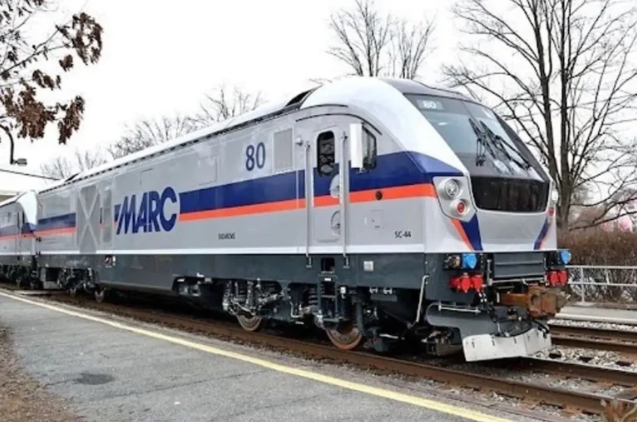
If you commute regularly to the nation's capital, the MARC Train (Penn and Camden lines) provides reliable, affordable daily commuter service between Baltimore, Prince George's County, and Washington Union Station.
If you prefer to drive, I-95 serves as the primary interstate spine, offering a direct route north toward Philly and New York or south into the D.C. metro area. For national or quick regional flights, BWI Marshall Airport provides a hassle-free, low-cost hub just minutes from major highways and rail lines — giving you unmatched connectivity to the East Coast's biggest markets in just a matter of hours.
Best Maryland Areas for Tri-State Transplants
Depending on your commute requirements and whether you want vibrant waterfront rowhomes or manicured master-planned suburban space, click any area below to explore:
The Home-Buying Process in Maryland (vs. What You're Used To)
Coming from NY, NJ, or CT, several critical parts of the transaction operate differently in Maryland:
Key Maryland Process Differences
- Title / Settlement Companies vs. Closing Attorneys: Unlike New York or Connecticut where separate buyer and seller attorneys manage contracts and closings, Maryland transactions are traditionally handled by licensed title and settlement companies. (You can still retain independent real estate legal counsel if desired).
- Transfer & Recordation Taxes: Maryland imposes state transfer taxes (0.5%), county transfer taxes (typically 0.5%–1.5%), and county recordation taxes. However, first-time Maryland homebuyers receive a 50% state transfer tax exemption by law.
- Closing Timeline: While New York closings often drag out 60 to 90+ days "on or about," Maryland transactions typically close in a predictable 30 to 45 days from an accepted contract.
Step-by-Step Relocation Timeline
4–6 Months Out: Strategy & City Selection
Select your relocation expert. Narrow down your target cities, assess commute patterns, and establish your financing pre-approval.
3 Months Out: First Tours (In-Person or Video)
Begin touring properties. Conduct live, detailed video walkthroughs of top listings and surrounding streetscapes.
1 Month Out: Submit Offer & Escrow
Submit offer. Most Maryland closings occur 30 to 60 days after the offer is officially accepted by the seller.
Closing & Move Week: Virtual Sign & Move-In
Sign closing documents in office or virtually from your current state. Coordinate your movers, get the keys, and welcome home!
The Honest Pros & Cons of Moving to Maryland
Every state has trade-offs. Here is an authentic breakdown to help you make an objective, well-informed relocation decision:
The Pros
- Lower housing costs: Buyers can often find substantially more house and yard for their money compared with many parts of New York, New Jersey, and Connecticut.
- Lower property taxes in some areas: Maryland has high-tax jurisdictions, but most buyers find the overall effective tax rate (<1% statewide) offers thousands in annual relief.
- Close to major cities: Baltimore, Washington DC, Philadelphia, and New York are all directly accessible via Amtrak, commuter rail, and the I-95 corridor.
- More space: Suburban Maryland offers larger homes, manicured yards, and newer communities without being removed from major employment hubs.
- Waterfront lifestyle: Chesapeake Bay communities such as Annapolis offer boating, marinas, waterfront dining, and coastal living without moving to New England or the Jersey Shore.
- Four distinct seasons: Maryland experiences all four seasons while generally enjoying milder winters than upstate New York or Connecticut.
- Strong job centers: Maryland has major employment hubs in healthcare (Johns Hopkins, University of Maryland), federal government, cyber/defense, education, and biotechnology.
The Cons
- Maryland taxes can be complicated: State income tax plus local county income taxes (e.g. 3.2% in Baltimore City and County) can make the tax picture less straightforward than newcomers expect.
- Traffic congestion: The Baltimore–Washington corridor can experience significant congestion, particularly during morning and evening rush hours on I-95 and I-495.
- Summer heat and humidity: Maryland summers are generally hotter and more humid than what many New York or Connecticut transplants are accustomed to.
- Property taxes vary considerably: The cost of living changes substantially depending on whether you purchase in Baltimore City (~1.4%) vs. Baltimore County (~1.0%–1.2%) or Howard County.
- Different real estate market: Home styles, historic building codes, title company settlement practices, and insurance requirements differ from NY, NJ, and CT.
- Distance from family: For transplants leaving the Northeast, moving farther from long-established family and social networks can be an emotional adjustment.
- Maryland-specific regulations: New residents must learn Maryland's specific vehicle titling fees, firearm registration laws, and tax filing guidelines upon establishing residency.
Frequently Asked Questions: Relocating to Maryland
Clear, factual answers to the most common out-of-state relocation questions.
For most buyers, yes — significantly. New Jersey has the highest effective property tax rate in the country at roughly 2.2%, with average annual property tax bills now exceeding $10,000. Maryland's statewide average is under 1%, and even Baltimore City (the highest-taxed jurisdiction in Maryland) is still well below the New Jersey average. Home prices in the Baltimore metro are also typically lower per square foot than in most New Jersey commuter towns.
Maryland's average effective property tax rate is roughly 0.9%–1.0%, compared to Connecticut's roughly 1.5%–1.9%. (Connecticut has no statewide rate — each of its 169 towns sets its own mill rate, so the exact gap depends on the town). On a comparably priced home, Maryland buyers typically pay meaningfully less in annual property taxes than Connecticut buyers, especially when compared to higher-mill-rate towns like Hartford, Bridgeport, or New Haven.
Baltimore is roughly 190 miles from New York City — less than a 3.5-hour drive depending on traffic, or a 2.5 to 3-hour train ride via Amtrak running directly from Baltimore Penn Station to Penn Station Manhattan. Many hybrid workers keep a New York-based job and travel in periodically without issue.
Maryland doesn't legally require an attorney at closing the way some states like New York and Connecticut do. Instead, licensed title and settlement companies conduct title searches, issue title insurance, and coordinate escrow and closing. However, many out-of-state buyers choose to use a real estate attorney for custom contract review, and Kevin can provide a list of trusted local attorneys.
Spring (April to June) and early fall (September to October) tend to have the deepest housing inventory in the Baltimore-Washington metro, giving relocators the greatest variety of listings. However, buyers move successfully year-round, and winter often brings lower competition and motivated sellers.
Take the Complete Guide With You (PDF)
Download the printable, formatted edition of this 2026 Maryland Relocation Guide — including the complete tax comparison tables, transit schedules, and community matrices.